Ottawa VIP · Homeowner resource · 2026
Ottawa Backwater Valve Rebate & Permit Guide (2026)
2026 Ottawa backwater valve rebate guide: eligibility, rebate caps, permits, inspections, application documents and the City’s conflicting deadline wording.
Ottawa’s Residential Protective Plumbing Program lists a maximum rebate of $1,000 for an indoor sanitary backwater valve, subject to the work’s eligible cost, property criteria, permit, inspection and application documents. For a storm backwater valve, the published maximum is also $1,000; an outdoor storm valve has a separate maximum of $2,500. These are caps, not guaranteed payments. Verify current rules with the City before booking work.
- Sanitary-valve property age test: built before January 1, 2012.
- Storm-valve property age test: built before January 1, 2004.
- Permit and inspection records are part of the listed application package.
- The City page contains both 12-month and 18-month deadline language; contact the program to confirm the deadline for your permit.
What is Ottawa’s Residential Protective Plumbing Program?
The City of Ottawa offers financial assistance to qualified property owners for specified protective plumbing devices, including sanitary and storm backwater valves and sump pumps. A backwater valve is installed in a drainage line to reduce the risk of wastewater reversing into a home. The program is different from insurance, a flood-damage grant or an automatic discount from a contractor. You pay for qualifying work and submit the City’s required records under its current process.
The City states that the rebate is the lesser of the listed maximum amount or the cost of the eligible work. A maximum therefore does not promise that every applicant will receive that amount. The invoice, device, location, permit, inspection, property age and application timing can all matter. Keep the program page and application instructions open while planning rather than relying on an older blog post, contractor advertisement or estimate.
Backwater valves address sewer reverse-flow risk. They are not drinking-water backflow preventers, and they do not address every basement flood. If a property has surface-water, groundwater or sump-pump concerns, ask about those separately. Ottawa VIP’s Ottawa backwater valve installation guide explains what the valve protects and what falls outside its purpose.
Who may qualify for an Ottawa valve rebate?
According to the City’s current Residential Protective Plumbing Program eligibility page, the property must be a residential unit within the City of Ottawa. The published age conditions are a home built before January 1, 2004 for a stormwater backwater valve and before January 1, 2012 for a sanitary backwater valve. Those cut-off dates are program rules, not a substitute for confirming the actual device type or the date the property was built.
The page also says the protective plumbing cannot have been installed by the City, the work must be completed under the applicable building permit, and the application must include proof of ownership, the permit, the building inspection report and an itemized paid invoice. The program excludes rebates for maintenance, repairs and replacement of existing protective devices. If a valve already exists—or a project combines a new device with other drainage work—ask the City how it treats the exact scope before work begins.
Do not assume a tenant, condominium owner, landlord or property manager can apply under the same process without checking ownership and authorization details. If a building has multiple units or shared plumbing, identify the legal property, dwelling type and applicant before requesting quotes. The City makes the eligibility decision; a contractor can help assemble project information but cannot guarantee approval.
Ottawa’s published protective-plumbing rebate maximums
| Qualifying work listed by the City | Maximum listed rebate |
|---|---|
| Building permit (plumbing work only) | 100% of the current fee |
| Indoor sanitary backwater valve | $1,000 |
| Storm backwater valve | $1,000 |
| Outdoor storm backwater valve only | $2,500 |
| Primary or secondary sump pump with battery backup in an existing sump pit | $1,500 |
| Sump pump with battery backup and construction of a new sump pit | $3,000 |
These figures are maximums displayed on the City program page when checked October 11, 2026. A lower eligible invoice can mean a lower rebate, and not every combination of equipment is eligible. The line for a plumbing permit refers to the current fee and qualifying permit work; it does not mean every construction cost or contractor charge is reimbursed. Read the official terms for the latest list, caps and required evidence.
Sanitary and storm valves are not interchangeable just because both are called backwater valves. Ask the plumber to identify which building drain the device serves and why that is the right category for your property. The City’s permit material refers to separate sanitary and storm installation contexts. A clear written quote should name the device and location rather than use an ambiguous “flood valve” label.
Important: Ottawa’s 2026 rebate deadline wording conflicts
The City’s live Residential Protective Plumbing Program page says that, effective July 1, 2026, the time allowed for completing the work and receiving the rebate application changed from 12 months to 18 months. But the page’s application steps still include a sentence instructing applicants to submit within 12 months of the permit issue date. Both statements currently appear on the official page.
This is a real planning detail, not a reason to wait. Save a dated copy or screenshot of the rules you relied on, and contact the program by the contact information shown on ottawa.ca to confirm the exact deadline for your building permit. Ask the City to clarify whether its 18-month update applies to your permit date and how “receipt” is calculated. Do not treat this article—or a plumber’s interpretation—as the City’s formal ruling.
Start collecting documents as soon as the work is complete. Allow time to book the required inspection, receive the report, finalize payment and assemble the application. If the City confirms a longer period, meeting the earlier printed deadline where feasible still reduces the risk of a missed application. The permit-specific answer should come from the City.
Why permits and inspections belong in the project budget
The City says a building permit is required before construction or renovation under the Building Code Act for projects covered by the program. Its dedicated backwater-valve permit page describes permit submissions and inspection expectations. It says new single, semi-detached, row-house and townhome dwellings require a sanitary valve on the building drain; the valve must be inside the dwelling and accessible for inspection and maintenance. An inspector checks the applicable installation requirements.
For an existing home, confirm which permit application applies to the proposed scope, who will prepare the plans or details, what fee applies and how inspections will be scheduled. The City page says permit plans and specifications must be available to the inspector and suggests booking an inspection in advance. Confirm these details with the City, since requirements depend on the work and current procedure.
A quote should make it clear whether the plumber applies for the permit, provides drawings or scope notes, coordinates the inspection, restores the floor and supplies the paid itemized invoice. Do not begin excavation because a rebate is available in principle. The City’s next-step instructions say to select a contractor, obtain a permit, complete the work, arrange inspection, pay the contractor and then submit the application package.
How to compare backwater valve installation quotes
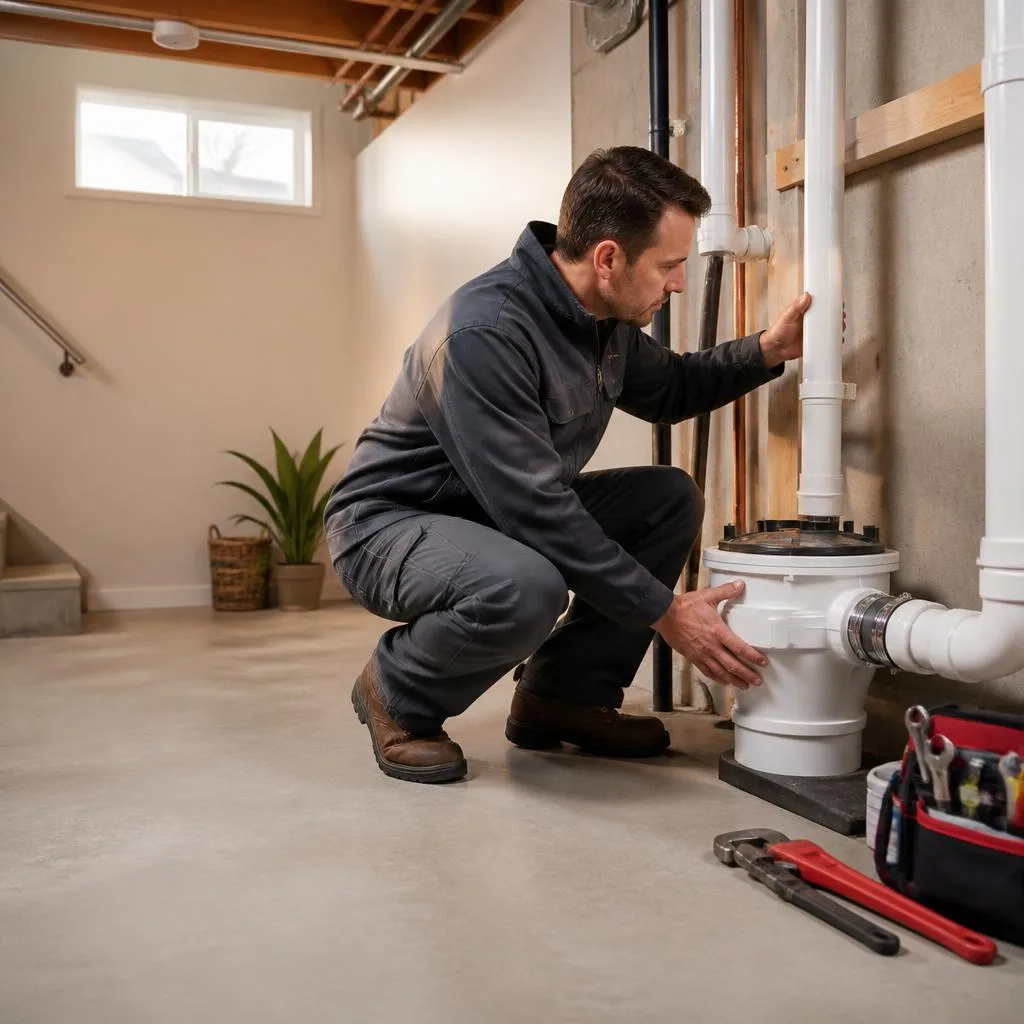
There is no responsible universal installation price for an Ottawa home without seeing its plumbing and finish conditions. A quote depends on where the building drain runs, how deep or accessible it is, whether the slab is finished, what diagnostic work is useful, whether a new access cover is required, how much concrete must be opened and restored, and the permit and inspection scope. If flooring, cabinetry or a finished basement must be protected or replaced, that can change the overall project beyond the valve itself.
Request an itemized written estimate that distinguishes assessment or camera work, permit or drawing support, concrete cutting and excavation, valve and pipe work, testing, inspection coordination, backfill, concrete restoration, flooring finish and disposal. Ask what conditions could change the price, who approves additional work, and how the contractor will preserve future access. Compare complete scopes rather than choosing the lowest number from estimates that include different work.
Discuss the rebate as a separate calculation: maximum eligible amount, actual eligible cost, any permit-fee treatment and timing. The rebate is not money in hand when the work begins, and homeowners should plan to pay the contractor under the agreed terms while applying to the City afterwards. Confirm whether a particular repair, replacement or combined job qualifies; the published program excludes maintenance, repair and replacement of existing protective devices.
For a local service scope, contact an Ottawa plumber for backwater valve work. Lister Plumbing’s page describes its installation service and assistance with City rebate documentation. Ask any contractor for a property-specific explanation, written scope, permit plan and documentation handoff; verify credentials and references independently.
Application checklist: keep these records together
Illustrative planning sequence only. The City controls the current program and application requirements.
- Before construction: confirm the property and device category against the current City rules; ask the City about the deadline discrepancy; obtain the required permit before work.
- During the project: keep permit documents, approved plans or scope notes, device details and communications about inspection.
- After installation: arrange the City inspection and retain the resulting Building Code Services inspection report.
- At payment: obtain a paid, itemized invoice that identifies the protective plumbing work and its cost.
- For the application: attach proof of ownership, permit, inspection report and invoice; use the City’s current online form and submit within the deadline it confirms.
Keep copies of everything and note when the City receives the application. If any item is missing or a line on the invoice is unclear, resolve it before sending the package. The City’s online application and program FAQ are the authoritative sources for the latest form and evidence requirements.
For wider protection questions, read the installation and maintenance guide and the site’s Ottawa plumbing overview. Each home has a different mix of sewer, surface-water, foundation and sump-pump risks.
Ottawa backwater valve rebate FAQs
How much is Ottawa’s backwater valve rebate in 2026?
The City’s current Residential Protective Plumbing Program lists a maximum of $1,000 for an indoor sanitary backwater valve. The City says it pays the lesser of the maximum or eligible work cost. Eligibility, permit, inspection and application requirements apply.
What home qualifies for Ottawa’s sanitary valve rebate?
The City’s published eligibility rules say the property must be a residential unit within Ottawa and built before January 1, 2012 for a sanitary backwater valve rebate. The device cannot have been installed by the City, the work needs a building permit and inspection, and the application needs supporting documents. Confirm current eligibility with the City.
Is the City’s 2026 rebate deadline 12 or 18 months?
The City program page has a July 1, 2026 update extending the deadline to 18 months, but another application instruction on the same page still states 12 months. Because the live page is inconsistent, ask the City which deadline applies to your permit before relying on either one.
Does Ottawa pay for a replacement valve?
The City program page says rebates are not available for maintenance, repair or replacement of existing protective plumbing devices. A replacement project may still have other permit or inspection requirements, so verify the current rules before authorizing work.
Do I need a permit to install a backwater valve in Ottawa?
The City’s rebate program requires a building permit for qualifying work, and its backwater-valve page sets out permit and inspection details. Ask the City or your contractor what permit applies to the specific property and scope before construction.
Does a backwater valve prevent all basement floods?
No. It is designed to help prevent reverse flow in the sanitary drainage line. It does not stop groundwater, surface runoff, foundation seepage, window-well flooding, water-supply leaks or sump-pump failure.
Official sources and editorial note
- City of Ottawa: Residential Protective Plumbing Program—rebate caps, eligibility, application steps and deadline update.
- City of Ottawa: Backwater valves—permit applications and inspection information.
- Ontario Building Code, O. Reg. 163/24—current provincial regulation; confirm the applicable version and project-specific requirements.
Ottawa VIP compiled this guide from public City and provincial sources, checked October 11, 2026. It is general information, not legal, code, financial or plumbing advice. The City page currently shows conflicting application deadlines; confirm your own deadline and eligibility with the program before work begins.